5 Essential Pickleball Drills Every Beginner Should Practice l...
Read More
l
Every sport has a moment when it stops being a trend and starts becoming a movement. Pickleball has reached that point. In the United States, it has been the fastest-growing sport for five consecutive years, with participation reaching 24.3 million players in 2025, up from 4.2 million in 2020.
That momentum is also being felt in India, where pickleball has grown rapidly in recent years. The Indian Pickleball Association reports more than 50,000 players across 27 states, reflecting the sport’s expanding presence across the country.
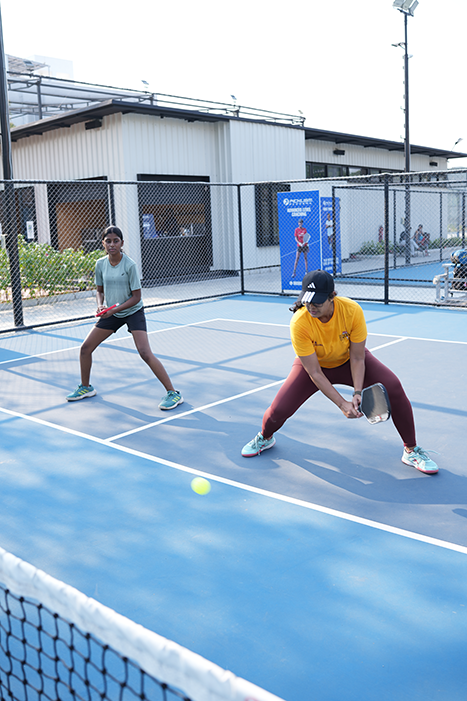
So what is it, exactly? In simple terms, pickleball is a paddle sport played on a small court, where two or four players hit a lightweight plastic ball back and forth over a net using solid, stringless paddles. It shares a little DNA with other racquet sports, but plays nothing like any of them once you’re actually on the court. Points are built through placement and patience as much as raw pace, which is a big part of why it’s rewriting what people expect from a racquet sport altogether.
At its core, pickleball rewards a genuine mix of power, precision, and smart play. Speed and strength absolutely matter, especially at competitive levels, but they only take you so far without control, placement, and court awareness to back them up. That balance is exactly why it appeals to such a wide range of people. Someone who has never picked up a racket in their life can enjoy a great rally in their very first session, while experienced athletes find endless room to sharpen both their power and their precision.
Why Is Pickleball Growing So Fast?
Pickleball’s popularity isn’t a coincidence. It’s a genuinely well designed sport that makes it easy for anyone to start, while still being deep enough to hold the attention of serious competitors.
Here’s what makes it so appealing:
ㆍIt’s simple to pick up, but has plenty of room to grow your skills
ㆍThe games are quick and exciting, with constant back and forth action
ㆍKids, adults, and seniors can all comfortably play on the same court
ㆍIt brings people together, with a warm and welcoming community feel
ㆍIt can be highly competitive, with opportunities to train, compete in tournaments, and progress to higher levels of play
Across India, new courts, coaching academies, leagues, and tournaments have been popping up in major cities over the past couple of years. Since the sport is still in its early days here, there’s a real opportunity for beginners to learn properly from the start. (We’ll be covering this in more depth in The Rise of Pickleball in India.
Who Should Play Pickleball?
Pickleball is one of the very few sports where a family doesn’t just watch each other play, they actually play together. Young kids, teenagers, parents, and grandparents can share the same court, enjoy the same rally, and even compete in the same match. It’s easy enough for anyone to pick up and genuinely enjoy from day one, yet deep enough to hold the attention of competitive players chasing titles. That combination is rare, and it’s a big part of why the sport has grown so fast.
Formats of Pickleball
Singles is played one player against one player. Since there’s no partner to share the court with, this format really tests your fitness, movement, and shot placement. It’s physically demanding, but incredibly rewarding once you get the hang of it.
Doubles is played two against two, and it’s the most popular way to play pickleball around the world. Teamwork, communication, and positioning matter just as much as your shot making. Most recreational games and tournaments you’ll come across are doubles matches, so this is a great format to focus on early.
Pickleball Terminology Every Beginner Should Know
Pickleball has its own language, and once you understand a few key terms, everything on the court will start to make a lot more sense.
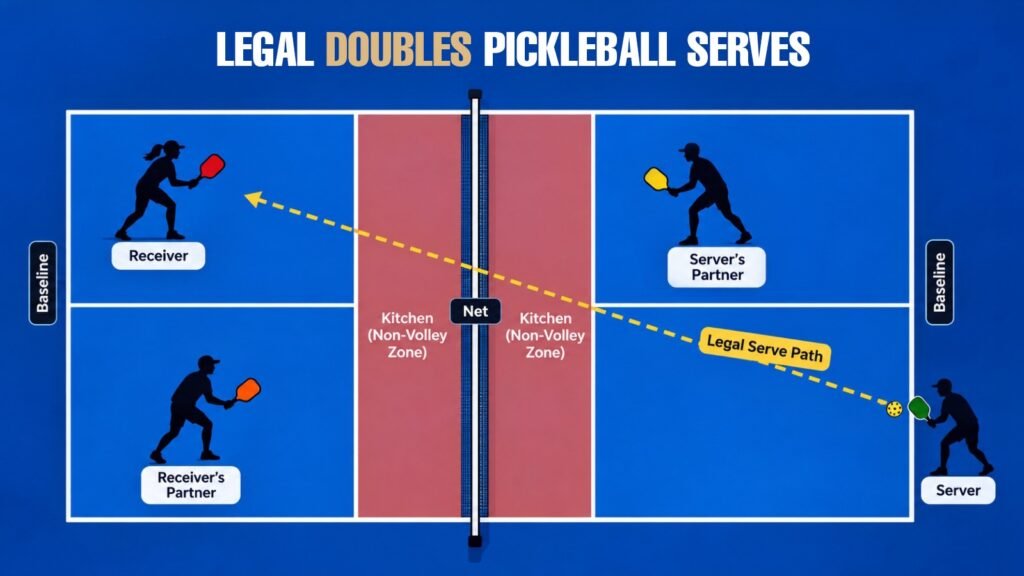
Serve Every rally starts with a serve. It must be hit underarm, travelling diagonally into the opponent’s service court, and the server needs to keep at least one foot behind the baseline while hitting it. A good serve does more than just start the point. It sets the tone for the whole rally by putting your opponent on the back foot from the very first shot.
Return The return is simply the receiving player’s first shot after the serve. A deep, well placed return gives you more time to move into a good position on the court and start the rally on your own terms, rather than reacting under pressure.
Volley A volley happens when you hit the ball in the air, before it bounces. Volleys are a powerful attacking tool, especially close to the net, but there’s one very important rule to keep in mind here, which brings us to the Kitchen.
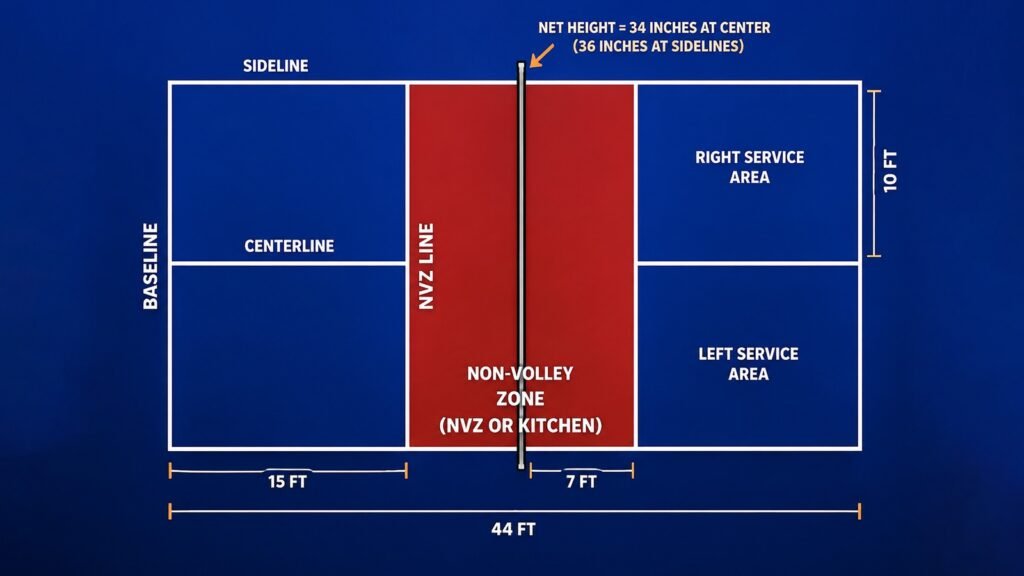
The Kitchen (Non-Volley Zone) Officially called the Non-Volley Zone or NVZ, the Kitchen is the seven foot area on either side of the net. You’re allowed to step into this zone to play a ball that has already bounced, but you cannot hit a volley while standing inside it or even touching the kitchen line.
This one rule shapes the entire personality of pickleball. It stops players from camping at the net and smashing every ball, which keeps rallies longer, more thoughtful, and honestly, more fun to be part of. For a closer look, read our full breakdown in Understanding the Kitchen Rule in Pickleball.
Dink A dink is a soft, gently controlled shot that you place inside your opponent’s kitchen. Instead of relying on power, a good dink relies on patience, placement, and consistency. At higher levels of play, you’ll often see several dinks exchanged before either player decides it’s the right moment to attack.
Fault A fault is anything that ends the rally early because of a rule break. Common examples include:
ㆍHitting the serve into the net
ㆍSending the ball out of bounds
ㆍVolleying while standing inside the kitchen
ㆍBreaking the double bounce rule
ㆍServing incorrectly
Knowing these early on will help you avoid the small, easy to fix mistakes that trip up most beginners in their first few games.
Pickleball Court Dimensions
One of the reasons pickleball feels so approachable is its compact court size. It’s small enough to cover comfortably as a beginner, but still leaves plenty of room for exciting, competitive rallies.
| Specification | Measurement |
| Length | 44 ft (13.41 m) |
| Width | 20 ft (6.10 m) |
| Format | Same size for both singles and doubles |
Court markings include: the baseline, sidelines, centreline, left and right service courts, the Non-Volley Zone (Kitchen), the kitchen line, and the net.
Understanding these markings will make it much easier to follow along during coaching sessions and matches.
Equipment You’ll Need
Step 1: The Serve The rally begins with an underarm serve, hit diagonally into the opponent’s service court.
Step 2: The Return The receiving player lets the serve bounce once before returning it.
Step 3: The Double Bounce Rule After the return, the serving team must also let the ball bounce once before playing it. Only after both of these bounces have happened can either team start volleying.
This rule is one of the reasons pickleball rallies feel so balanced. It gives both sides a fair chance to get into position before the game speeds up.
Step 4: Kitchen Play Once both teams move up towards the net, you’ll usually see a series of soft dinks exchanged in and around the kitchen, until someone spots the right moment to attack. Learning when to be patient and when to go on the offensive is one of the most enjoyable parts of getting better at pickleball.
Basic Pickleball Rules
Before you step onto the court, keep these fundamentals in mind:
ㆍEvery serve must be underarm
ㆍThe serve must travel diagonally into the correct service court
ㆍBoth teams must follow the double bounce rule
ㆍPlayers cannot volley while standing inside the kitchen
ㆍBalls landing on the boundary lines are generally considered in
ㆍMost recreational games are played to 11 points, and must be won by at least two points
Once these basics feel comfortable, you’ll be ready to enjoy your first proper game with confidence.
For most beginners, scoring is the one part of pickleball that feels a little confusing at first. The good news is that it clicks quickly once you’ve played a couple of games, so don’t worry if it doesn’t make complete sense right away.
The one thing to always remember is this: only the serving side can score points. If the receiving side wins a rally, they don’t get a point. Instead, they simply earn the right to serve.
In singles, the score is read out as two numbers: Server’s Score, Receiver’s Score.
For example, a score of 6, 4 means the server has 6 points and the receiver has 4. If the server wins the next rally, the score becomes 7, 4 and they continue serving. If they lose the rally, no point is given, and the serve simply passes to their opponent.
Doubles Scoring
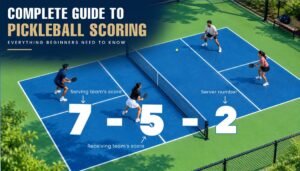
Doubles scoring works a little differently, since there are two players on each team. The score is read out as three numbers: Serving Team Score, Receiving Team Score, Server Number.
For example, a score of 8, 5, 2 means the serving team has 8 points, the receiving team has 5, and the second server on the serving team is currently serving.
At the start of every doubles game, only one player from the first serving team serves before the serve passes over to the opponents. After that, both teammates get their turn to serve before the serve changes sides again. It sounds like a lot at first, but your coach will walk you through it, and it becomes second nature after just a few matches.
For a deeper walkthrough with more examples, read our full guide, Pickleball Scoring Explained.
How Do You Win a Pickleball Game?
Most recreational and tournament games are played to 11 points, but simply reaching 11 isn’t enough. You need to win by at least two points.
For example: ✅ 11, 6 ✅ 11, 9 ❌ 11, 10 (this isn’t a win yet, play continues)
If the score reaches 10, 10, the game continues until one side leads by two points. Some tournaments use formats that go up to 15 or 21 points instead, depending on the event.
Learn Pickleball the Right Way, With Picklism Academy
Pickleball is easy to pick up, but learning it the right way from the start makes a real difference. Structured coaching helps you build strong fundamentals, develop proper technique, and avoid habits that are much harder to unlearn later on.
At Picklism Academy, our coaching programmes are designed for every age and skill level, so every player can grow with confidence, whether you’re stepping onto a court for the very first time or preparing to compete in tournaments.
Our programmes include:
ㆍJunior Pickleball Coaching
ㆍAdult Beginner Coaching
ㆍIntermediate Coaching
ㆍAdvanced Coaching
ㆍPrivate Coaching
ㆍSkill Based Workshops
ㆍTournament Training
Every session follows a progressive learning path, helping you improve step by step while genuinely enjoying the game along the way.
Pickleball is a paddle sport played on a compact court using a solid paddle and a lightweight perforated ball. It’s easy to learn, enjoyable for players of all ages, and can be played recreationally or competitively.
Yes. Most beginners understand the basic rules within their first session and can enjoy rallies almost immediately. Regular practice and good coaching help you build consistency and strategy over time.
There’s no minimum or maximum age. Children, teenagers, adults, and seniors all enjoy pickleball, and coaching programmes are often tailored to suit different age groups and skill levels.
Absolutely. Pickleball improves cardiovascular fitness, agility, balance, coordination, and reflexes, all while being relatively gentle on the joints compared to many other sports.
To begin playing, you’ll need a pickleball paddle, pickleball balls, comfortable sportswear, and court shoes with good grip. Many academies, including Picklism, also provide equipment for beginners during trial sessions.
Both. Pickleball can be played on indoor and outdoor courts, and while the rules stay the same, outdoor conditions like wind can sometimes affect gameplay.
Yes, absolutely. Pickleball is designed to be beginner friendly, which is part of what makes it one of the easiest sports to pick up, even with zero prior experience.
The Kitchen, or Non-Volley Zone, stops players from camping right at the net and smashing every ball. This one rule is what keeps rallies longer, more strategic, and much more enjoyable to both play and watch.
If you’re looking for structured pickleball coaching in Chennai, joining a dedicated academy is one of the best ways to learn proper technique, understand the rules, and improve steadily. At Picklism Academy, players of all ages and skill levels train through structured coaching programmes led by experienced coaches.
What Should You Learn Next?
Now that you understand the basics, continue your pickleball journey with these guides:
ㆍComplete Guide to Pickleball Scoring
ㆍUnderstanding the Kitchen Rule
ㆍPickleball Court Dimensions Explained
ㆍHow to Choose Your First Pickleball Paddle
ㆍTop 10 Beginner Mistakes in Pickleball
ㆍEssential Pickleball Drills for Beginners
Give your child the opportunity to learn, grow, and stay active with Picklism Academy’s Pickleball Coaching for Kids.
Visit: https://picklismacademy.com/
Book a trial session today and start your child’s pickleball journey!
Our Blogs
5 Essential Pickleball Drills Every Beginner Should Practice l...
Read MoreComplete Guide to Pickleball Scoring l September 15, 2026...
Read MoreTop 10 Beginner Mistakes in Pickleball And How to...
Read More
Picklism Academy is where passion meets performance. We help players of all levels learn, train, and master pickleball with structured programs, expert coaching, and world-class facilities.
Stay updated with coaching tips, leagues, events, exclusive gear offers, and everything pickleball.

All Age. All Level. One Academy.